Pre-Alpha 0.1.0
Planned — Q4 2026♟Characters5 Entries⌄
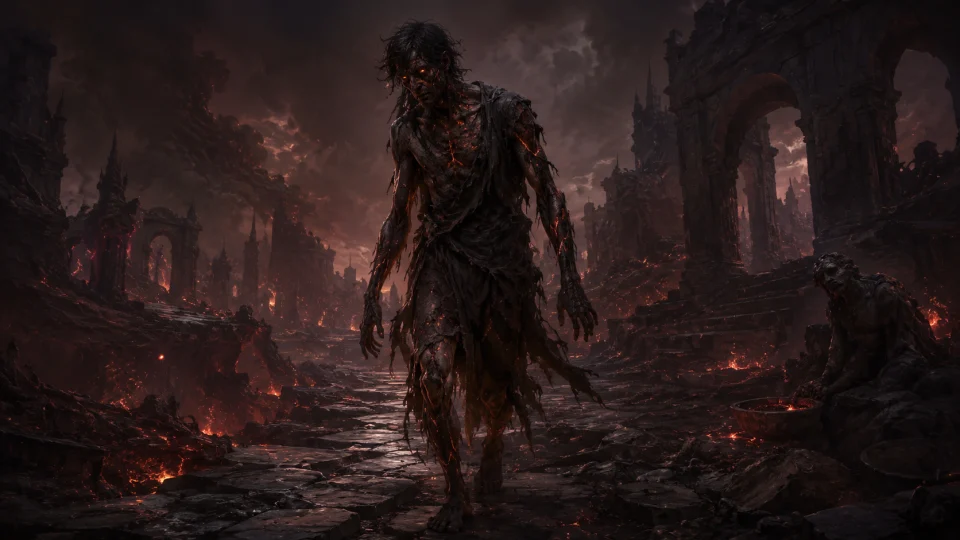
Tempted Wanderer
In developmentCreate the common corrupted soul enemy for Infernum Layer 1, serving as the baseline swarm threat across roads, ruins, settlements and public event spaces.
Read details
Develop the Tempted Wanderer as the most common humanoid enemy in Infernum Layer 1: Temptation. These are corrupted mortal souls whose identities have eroded, leaving behind only fragmented urges, cravings and obsessive impulses. Wanderers form the core ambient threat population for the layer and are intended to introduce players to the corruption themes of temptation, addiction, obsession and spiritual decay.
This work includes the Wanderer’s visual identity, AI behaviour, combat profile, movement states, audio cues, environmental placement, encounter use and corruption presentation. Individually they are weak, but in groups they become dangerous through swarm pressure, relentless pursuit and erratic aggression. They are expected to populate roads, ruined districts, abandoned structures, outskirts and event spaces throughout Layer 1.
Tempted Devotee
PlannedBuild the disciplined fanatic infantry enemy for Infernum Layer 1, acting as an aggressive frontline zealot that fights with coordination and devotion.
Read details
Develop the Tempted Devotee as a more advanced corrupted soul enemy for Infernum Layer 1: Temptation. Unlike Wanderers, Devotees have not lost themselves completely. Instead, they willingly embraced temptation and surrendered to it, becoming focused, fanatical servants of obsession, worship and infernal purpose. They function as aggressive melee infantry, protectors and recruiters for the powers operating within Layer 1.
This work includes visual design, armor and ritual styling, AI squad behaviour, melee combat abilities, support interactions with other Tempted enemies, encounter roles and environmental placement. Devotees should feel more purposeful and organised than Wanderers, often appearing in groups around ritual spaces, corrupted settlements, palace districts and religious structures. Their role is to deepen the sense of faction hierarchy within the Tempted enemy ecosystem.
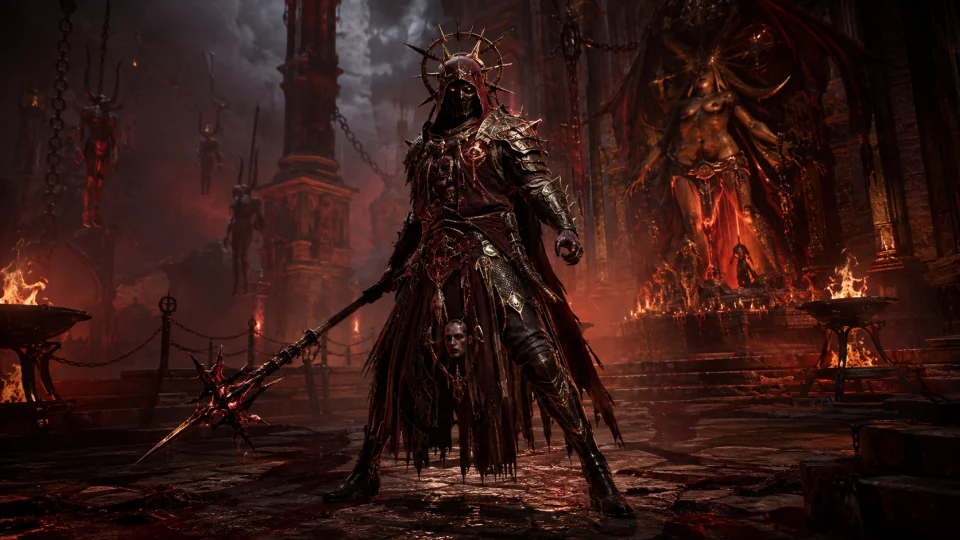
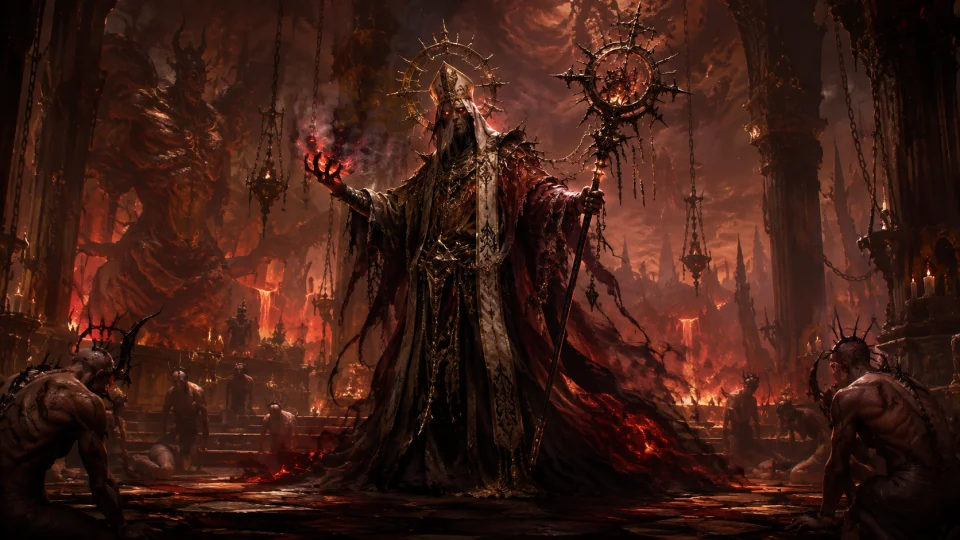
Tempted Herald
PlannedCreate the corrupt evangelist and support-caster enemy for Infernum Layer 1, commanding nearby Tempted forces through manipulation, persuasion and infernal influence.
Read details
Develop the Tempted Herald as a high-value support and commander-type enemy for Infernum Layer 1: Temptation. Heralds are former Devotees who have become embodiments of temptation itself. Rather than engaging primarily in melee combat, they manipulate the battlefield through psychological pressure, corruption effects, ally empowerment and recruitment-style control over weaker Tempted enemies.
This work includes the Herald’s ceremonial visual identity, voice and audio presentation, caster-style abilities, support mechanics, AI command role and placement in ritual chambers, shrines, Crimson Basilica areas, public events and elite patrols. Heralds should serve as dangerous corruption amplifiers who make surrounding encounters harder by strengthening allies, weakening player resistance and acting as spiritual officers within the Layer 1 enemy hierarchy.
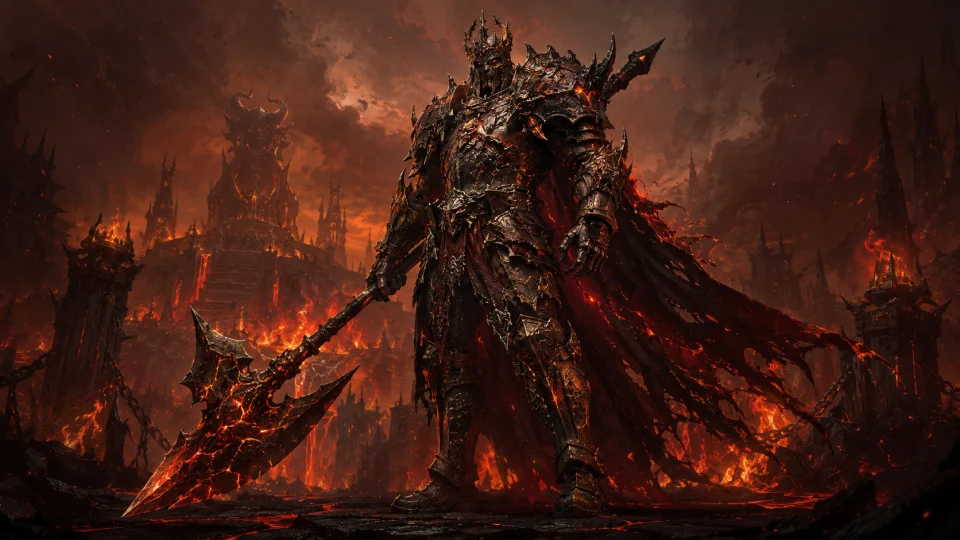
Tempted Champion
PlannedBuild the elite fallen warrior of Infernum Layer 1, serving as a high-threat melee commander, mini-boss lieutenant and frontline leader for Tempted forces.
Read details
Develop the Tempted Champion as an elite humanoid combatant for Infernum Layer 1: Temptation. Champions were once strong warriors, heroes, nobles or protectors who resisted corruption longer than most, only to eventually fall through pride, ambition, desire or the belief that they could master Hell’s bargain. That history should be reflected in both their visual identity and their combat presence.
This work includes heavy corrupted armor design, elite melee combat behaviour, commander interactions, ability kit, encounter roles and placement in district strongholds, ritual platforms, public events, dungeon approaches and high-threat patrols. Champions should function as elite bruisers and mini-boss-tier enemies who lead lesser Tempted units, create pressure in important encounters and embody the tragedy of great strength turned toward corruption.

Emberwyrm
PlannedCreate the native lava-river predator of Infernum Layer 1, adding an environmental ambush creature that turns volcanic routes and molten crossings into active hazards.
Read details
Develop the Emberwyrm as a native infernal beast enemy for Infernum Layer 1: Temptation. Unlike the Tempted humanoids, the Emberwyrm is not a corrupted soul but a natural predator within Hell’s lava ecosystems. It inhabits molten rivers, lava channels, ravines and infernal riverbanks, using heat, vibration and movement to detect prey before striking from beneath the surface.
This work includes creature design, lava-surface movement behaviour, ambush attacks, environmental interaction, encounter design and ecosystem role. Emberwyrms should make lava spaces feel alive and dangerous, especially around bridges, crossings, channels and public event areas. Their function is to reinforce that Layer 1’s environment is itself hostile, with predators capable of turning traversal routes and volcanic terrain into combat threats.
⚙Core Technology2 Entries⌄
Data-Driven Interaction Framework
In developmentBuilds the reusable technical foundation that allows interactions to be generated dynamically across thousands of objects and future gameplay systems.
Read details
The Data-Driven Interaction Framework provides the shared technical foundation behind Mythic Earth’s interaction systems.
Instead of requiring every interactable object to define its behaviour independently, the framework identifies objects, interaction capabilities and states through reusable data definitions. Valid actions can then be generated at runtime according to the player’s context, the object type, its current state and any conditions affecting the interaction.
Shared data can also define predefined groups such as weapons, equipment, grenades and emotes while allowing contextual actions to be generated dynamically when required.
The framework is designed to scale across thousands of item types and support future equipment, vehicles, ships, mounts, crafting, housing, trading, companion systems and expansions without rebuilding the core interaction architecture for each new feature.
This foundation allows future Mythic Earth systems to connect to a common interaction language while keeping individual content implementations modular and data-driven.
Authoritative Multiplayer Interactions
PlannedExtends the Interaction System with server-authoritative validation so interactions remain consistent and secure during multiplayer gameplay.
Read details
Authoritative Multiplayer Interactions provide the networking foundation required for Mythic Earth’s universal interaction system to operate consistently across multiplayer sessions.
Players can request an interaction from their client, but the authoritative game instance validates the request before allowing the interaction to occur.
Validation can confirm that the target still exists, that the player has the required ownership or permissions, that the object is in the expected state, that the player is within the permitted interaction distance and that any required conditions are satisfied.
Only valid requests are executed.
This architecture allows the same interaction framework used during single-player gameplay to operate securely in multiplayer while reducing opportunities for client-side exploits, invalid state changes or inconsistent interactions between players.
The system provides a shared multiplayer foundation for future interactions involving items, equipment, NPCs, containers, vehicles, ships, mounts and other networked gameplay systems.
⚔Gameplay4 Entries⌄
Context-Aware Interaction System
In developmentIntroduces Mythic Earth’s universal interaction system, allowing players to quickly interact with items, NPCs, doors, vehicles, containers and other world objects through a consistent context-aware control.
Read details
The Context-Aware Interaction System establishes the primary way players interact with the world of Mythic Earth.
A single interaction control provides fast access to the most appropriate action for the current situation. Tapping the interaction control performs the current Primary Interaction, allowing common actions such as picking up items, opening doors, talking to NPCs, entering vehicles, activating objects or storing equipment without navigating additional menus.
Available interactions are determined dynamically using the player’s current context, the type of object being interacted with and its current state. This allows the same object to offer different actions depending on where it is, how it is being used and what has already happened to it.
The system is designed to provide simple one-button interaction for common actions while remaining flexible enough to support increasingly complex objects, equipment, NPCs, mounts, ships, crafting systems and future gameplay features.
Interaction Wheel
In developmentAdds a layered radial interaction wheel that gives players fast access to weapons, equipment, actions, emotes and other context-sensitive options.
Read details
The Interaction Wheel expands the standard interaction control into a layered radial menu for situations where more than one action or selection is available.
Holding the interaction control opens the wheel instead of immediately performing the Primary Interaction. The first level presents major interaction categories, including Primary Weapon, Secondary Weapon, Tertiary Weapon, Melee Weapon, Grenades, Actions and Emotes.
Selecting a category populates the outer level of the wheel with the options currently available to the player. Weapon categories can display available weapons, grenade categories can present carried grenade types, and the Emotes category can provide access to actions such as waving, saluting, cheering or sitting.
The Actions section is generated according to the player’s current situation, allowing the wheel to adapt to different objects, NPCs, vehicles and gameplay systems without requiring a separate menu for every interaction type.
The result is a unified interface that keeps common interactions fast while giving players access to more complex options when they need them.
Preferred Interactions
PlannedAllows players to choose which action becomes their default interaction for specific objects and situations.
Read details
Preferred Interactions give players direct control over how Mythic Earth responds when multiple valid actions are available.
Each interaction scenario can have its own preferred action based on the player’s current context, the type of item or object involved and its current state. The selected Preferred Interaction then becomes the Primary Interaction performed when the interaction control is tapped.
For example, an item found on the ground may default to Pick Up, while the same item currently held by the player may default to Store or Drop.
Preferences remain independent between different situations and are only changed when the player deliberately selects a new preference. Using another available interaction once will not silently replace the player’s saved choice.
This allows players to customise frequently used interactions while maintaining predictable controls across equipment, world objects and future gameplay systems.
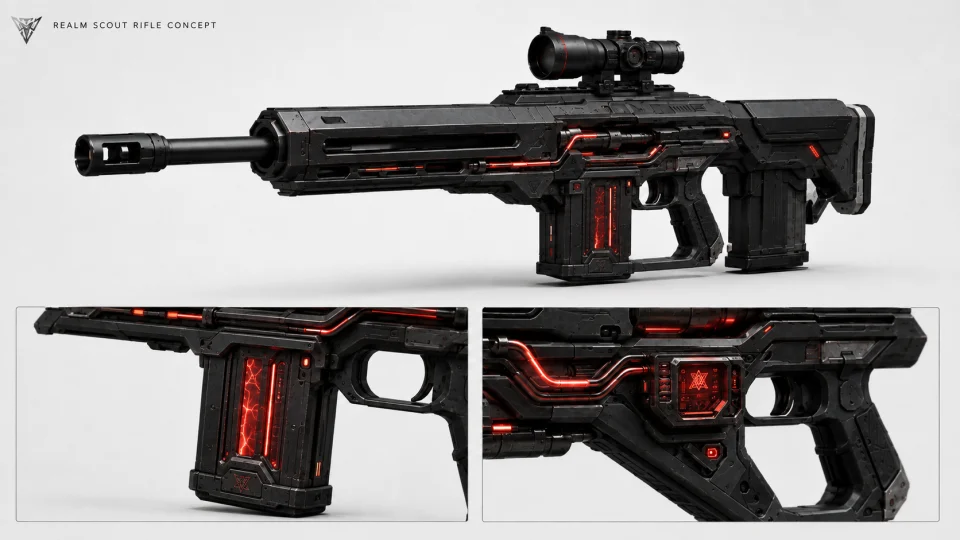
Scout Rifle — Gunplay & Weapon Mechanics Prototype
In developmentDevelop a functional Scout Rifle prototype used to test and refine Mythic Earth’s firearm handling, shooting mechanics, weapon behaviour and combat feel.
Read details
Develop the first functional Scout Rifle prototype as a controlled test platform for Mythic Earth’s firearm and gunplay systems.
The weapon will be used to establish and validate the core mechanics that later firearms can build upon, including aiming, firing, recoil, accuracy, damage delivery, ammunition handling, reload behaviour, weapon switching, animation integration, audio and visual feedback, hit reactions and general combat responsiveness.
The Scout Rifle also provides a practical platform for testing weapon architecture and tuning how firearms feel across different combat distances. Development can include sight behaviour, hip-fire versus aimed fire, spread and accuracy models, recoil recovery, rate of fire, magazine behaviour, projectile or hitscan implementation, impact effects and interaction with enemy damage systems.
The purpose of this milestone is not to finalise every Scout Rifle variant or weapon family. It is to create a reliable playable firearm that can be used to prove, test and refine the underlying gunplay mechanics before those systems are expanded across additional Primary, Special and Heavy weapon types.
◆Locations & Biomes1 Entry⌄
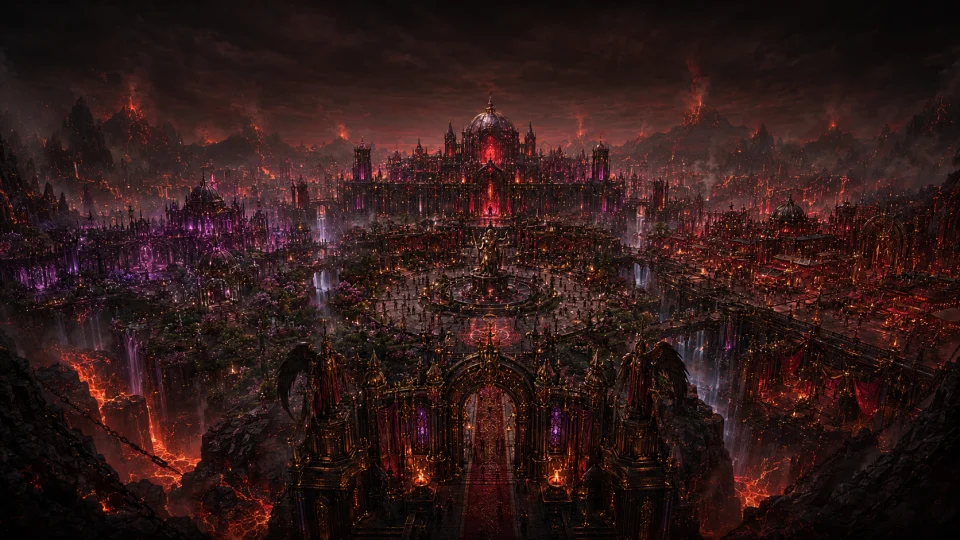
Hell Level One: Temptation
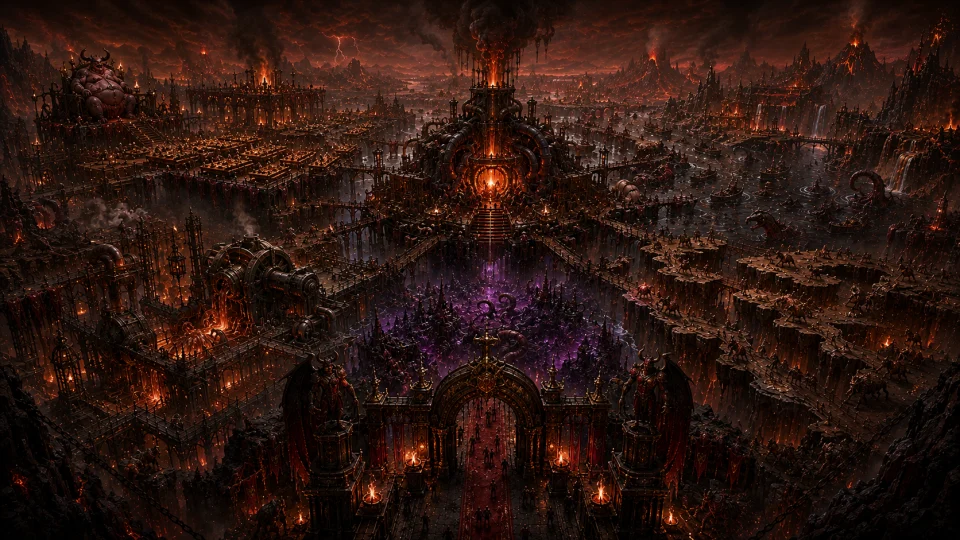
In developmentThe first playable layer of Hell, an expansive Infernal realm where players explore the Arrival Sanctum, gather around the Crimson Basilica and confront a world shaped by temptation, corruption and survival.
Read details
Hell Level One: Temptation introduces the first fully explorable layer of Hell within Mythic Earth.
Players enter through the Arrival Sanctum before venturing into a vast Infernal environment centred around the Crimson Basilica and its surrounding islands, settlements, ruins and hostile territories. The level combines social spaces, dangerous patrol regions, environmental storytelling and routes leading toward activities, public events and deeper Infernal locations.
Temptation defines the identity of the layer. Hell does not rely only on violence or punishment; it offers power, comfort, revenge, salvation and fulfilment to those willing to accept the hidden cost. The environment, architecture, inhabitants and supernatural hazards reflect the desires and weaknesses used to manipulate those who enter.
This Roadmap deliverable covers the playable realm itself, including its layout, environmental identity, major hubs, traversal routes, Infernal atmosphere and foundational world presentation. Individual missions, public events, characters, enemies and gameplay systems within the level may be tracked as separate Roadmap cards when they represent independently deliverable work.
✥RPG Systems2 Entries⌄
Infection System
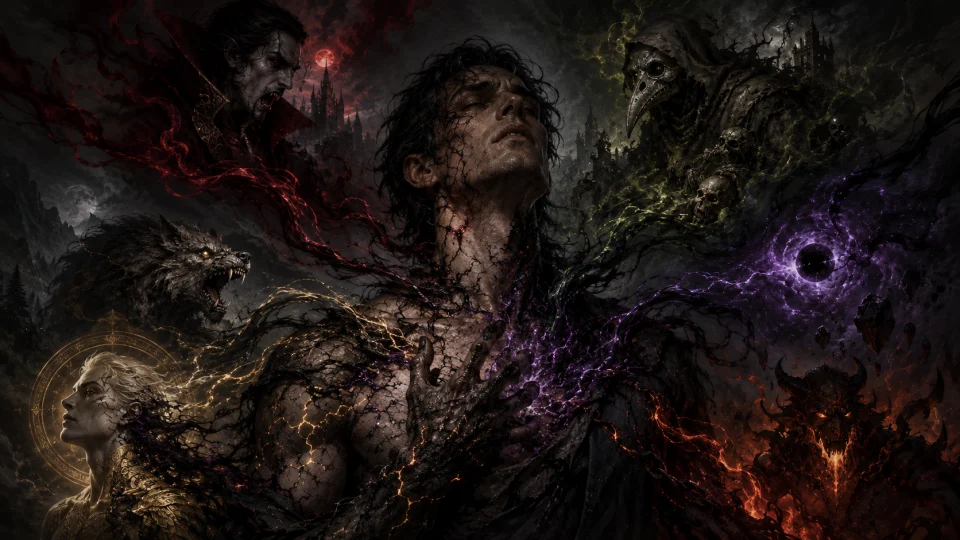
PlannedA persistent character-state system that allows players to contract supernatural infections, manage their symptoms and face the risks, weaknesses and transformations that develop over time.
Read details
The Infection System introduces persistent supernatural conditions that can change how a character functions, develops and interacts with the world.
Players may become infected through creature attacks, environmental hazards, cursed objects, corrupted weapons or exposure to dangerous energies. Infection types may include vampirism, lycanthropy, zombie infection, Void corruption, Infernal infection and other supernatural afflictions encountered throughout Mythic Earth.
Infection operates independently from Infusion. A character may be non-infused but infected, or may carry Raven, Void or Infernal Infusion while also suffering from an infection. The interaction between these states can alter symptoms, resistances, weaknesses and possible transformation outcomes.
Each infection can progress through multiple stages, introducing increasingly serious physical, visual and gameplay effects. Players may attempt to suppress or cure an infection through medicine, rituals, cleansing and specialist assistance, or choose to embrace its effects and accept the consequences of transformation.
The system creates long-term character consequences and supports meaningful choices surrounding treatment, concealment, control and transformation.
Infusion System
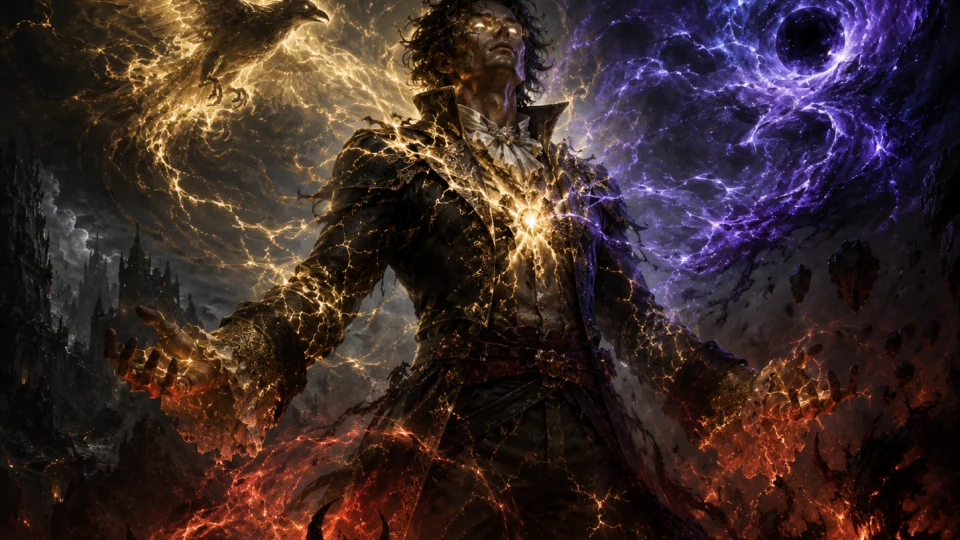
PlannedA persistent character-empowerment system that allows individuals to become infused with Raven, Void or Infernal energy, granting supernatural abilities, enhanced traits and source-specific progression.
Read details
The Infusion System allows characters to become permanently empowered by concentrated supernatural energy drawn from powerful sources such as the Ravens, the Void or Hell.
Unlike Infection, which is an affliction contracted through exposure, injury or contamination, Infusion fundamentally strengthens and alters the character. An infused individual gains supernatural abilities, enhanced physical or mystical traits, new resistances and access to powers associated with the source of their Infusion.
Each Infusion type provides its own identity, abilities, strengths, limitations and progression path. Raven Infusion may awaken Guardian abilities and strengthen a character’s connection to Earth’s protective energies. Void Infusion may grant destructive or reality-altering powers while creating dangerous consequences. Infernal Infusion may provide abilities drawn from Hell, including supernatural resilience, aggression or control over Infernal energy.
Infusion and Infection operate as separate but interconnected systems. A character may remain uninfused, become infused without being infected, or carry an Infusion while also suffering from vampirism, lycanthropy, undeath, corruption or another supernatural Infection. These combinations may alter available abilities, resistances, weaknesses and transformation outcomes.
The system supports long-term character development by allowing Infusion to influence powers, progression, appearance, dialogue, faction reactions and the way a character interacts with supernatural forces throughout Mythic Earth.
◇User Interface & UX6 Entries⌄
Character Sheet Redesign — Weapons
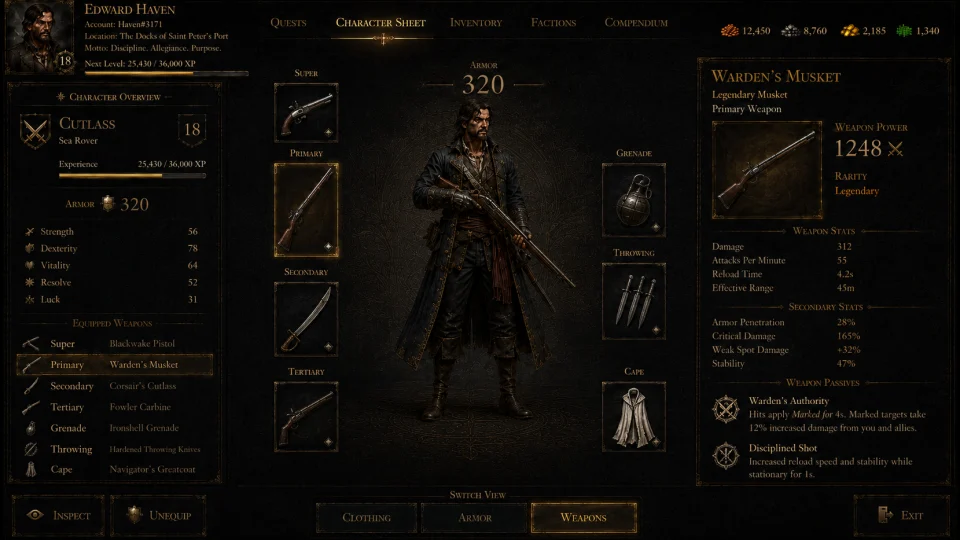
In developmentRedesign the Weapons view of the Character Sheet to provide a clear interface for viewing and managing the player’s equipped weapons and persistent character equipment.
Read details
The Weapons view redesign establishes the weapon-focused layout of the Mythic Earth Character Sheet.
The screen presents the player character alongside dedicated weapon slots for Primary, Secondary and Tertiary weapons, together with Grenade and Throwing equipment.
Persistent Character Sheet elements remain available while switching between equipment views, including the player’s Super ability, Cape, character preview, core character information, selected-item details and navigation between Weapons, Clothing and Armor.
The redesigned layout is intended to make equipped weapons immediately understandable while providing enough space for detailed item information and future weapon-related functionality.
The Weapons view forms one part of the wider Character Sheet redesign and shares a consistent visual structure with the Clothing and Armor views.
Character Sheet Redesign — Clothing
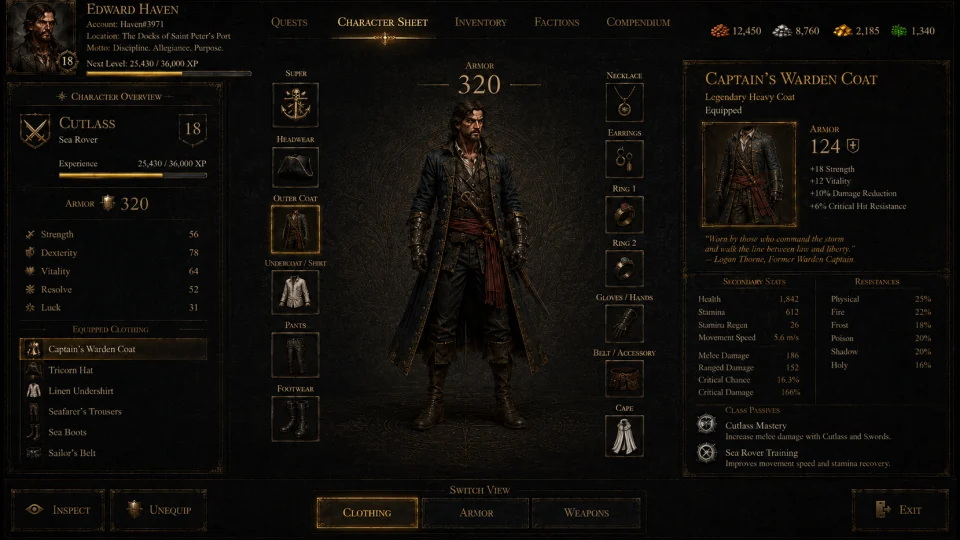
In developmentRedesign the Clothing view of the Character Sheet to provide a dedicated interface for managing the player’s clothing, jewellery and wearable equipment.
Read details
The Clothing view redesign provides a dedicated Character Sheet layout for the player’s non-armour clothing and wearable equipment.
The interface presents the player character alongside clothing slots including Headwear, Outer Coat, Undercoat or Shirt, Pants, Footwear, Necklace, Earrings, Rings, Gloves or Hands, and Belt or Accessory.
Persistent Character Sheet elements remain visible across equipment views, including the Super ability, Cape, character preview, core character information, selected-item details and navigation between Clothing, Armor and Weapons.
The redesign is intended to make the player’s appearance and equipped clothing easy to understand while supporting Mythic Earth’s extensive range of historical clothing, jewellery and wearable items.
The Clothing view shares the same underlying Character Sheet structure as the Weapons and Armor views while adapting the equipment layout to the needs of clothing and cosmetic equipment.
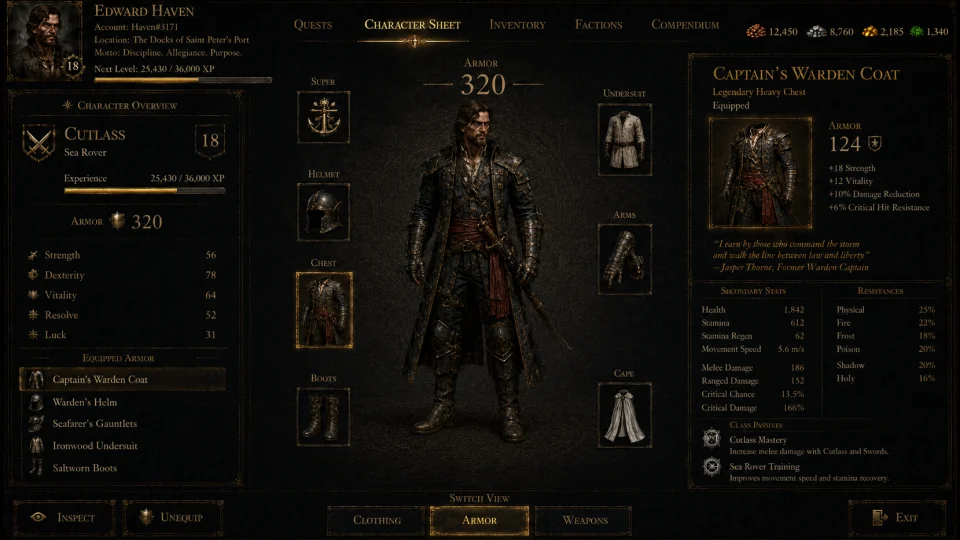
Character Sheet Redesign — Armor
In developmentRedesign the Armor view of the Character Sheet to clearly present the player’s equipped protective gear and armor configuration.
Read details
The Armor view redesign creates the dedicated Character Sheet interface for managing the player’s protective equipment.
The screen presents the player character alongside dedicated slots for Helmet, Chest, Arms, Boots and Undersuit equipment.
Persistent Character Sheet elements remain available while changing equipment views, including the Super ability, Cape, character preview, core character information, selected-item details and navigation between Armor, Clothing and Weapons.
The interface is designed to provide a clear overview of the player’s current armor configuration while supporting detailed inspection and management of individual pieces of equipment.
Together with the Weapons and Clothing views, the Armor screen forms part of a unified Character Sheet experience designed to keep different equipment types visually distinct without separating them into unrelated interfaces.
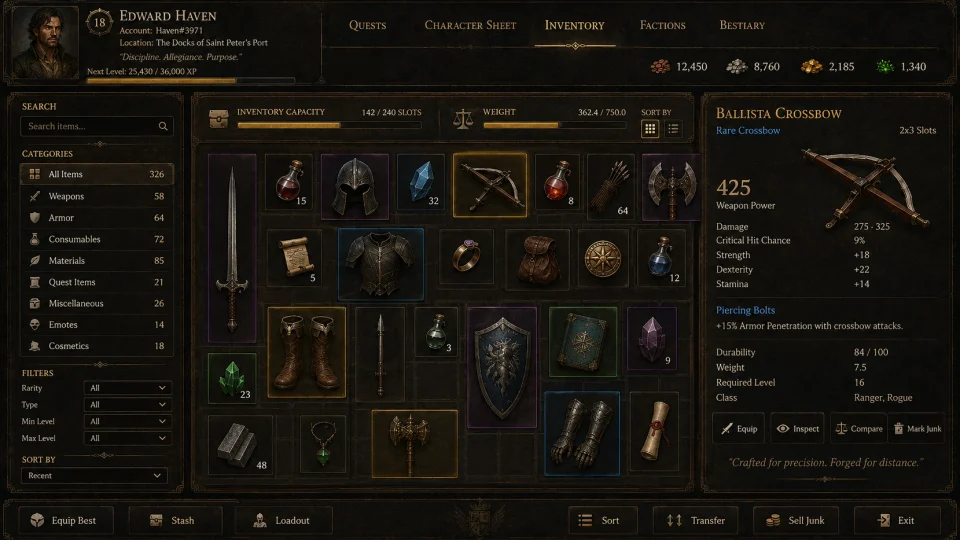
Inventory Screen
In developmentRedesign the Inventory Screen to provide a clearer and more scalable interface for managing carried items, equipment and player loadouts.
Read details
The redesigned Inventory Screen establishes the primary interface for viewing and managing the items carried by the player.
The new layout is designed to make large inventories easier to navigate while maintaining clear separation between equipped items, stored inventory and supporting item information.
Players will be able to browse their equipment and carried items through a consistent visual structure that prioritises readability, item recognition and fast navigation.
The Inventory Screen is being designed to support Mythic Earth’s growing range of weapons, armour, clothing, consumables, tools and other collectible items while providing room for future inventory and equipment systems without requiring another major interface redesign.
Its visual language will remain consistent with the Character Screen and other major player interfaces, helping the different systems feel like parts of one unified game experience.
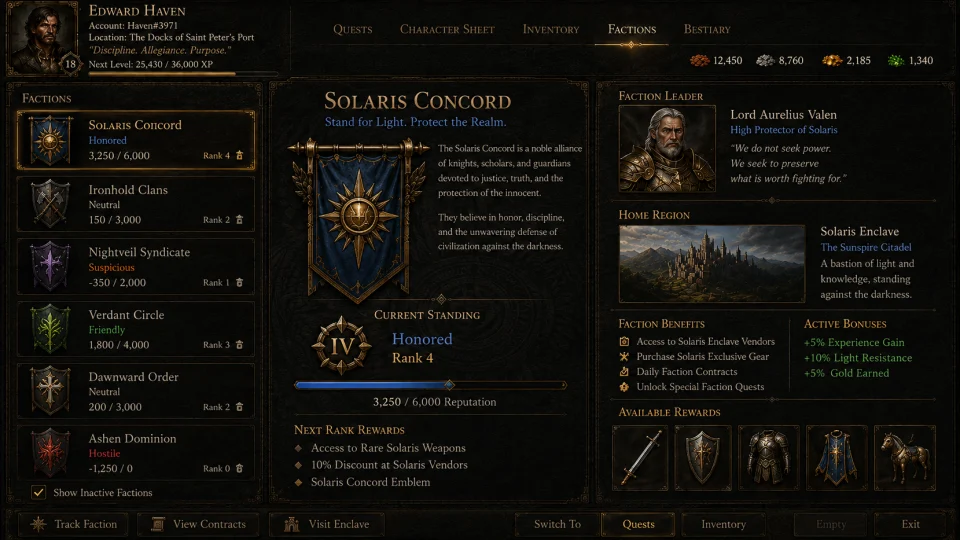
Factions Screen
In developmentRedesign the Factions Screen to clearly present faction relationships, reputation ranks, progression, leaders, benefits and available rewards.
Read details
The redesigned Factions Screen provides the central interface for viewing the player’s relationship with the factions of Mythic Earth.
Players can select a faction and review its identity, current standing and reputation progression through a layout designed to make faction relationships immediately understandable.
The screen brings together faction information including reputation status, current rank, progression toward the next rank, faction leadership, associated regions, benefits and upcoming rewards.
Different relationship states can be communicated visually so players can quickly distinguish friendly, honoured, suspicious or hostile factions and understand how their actions have affected each relationship.
The Factions Screen is designed to support the wider faction reputation and progression systems while giving individual factions a stronger visual identity and sense of place within the world.
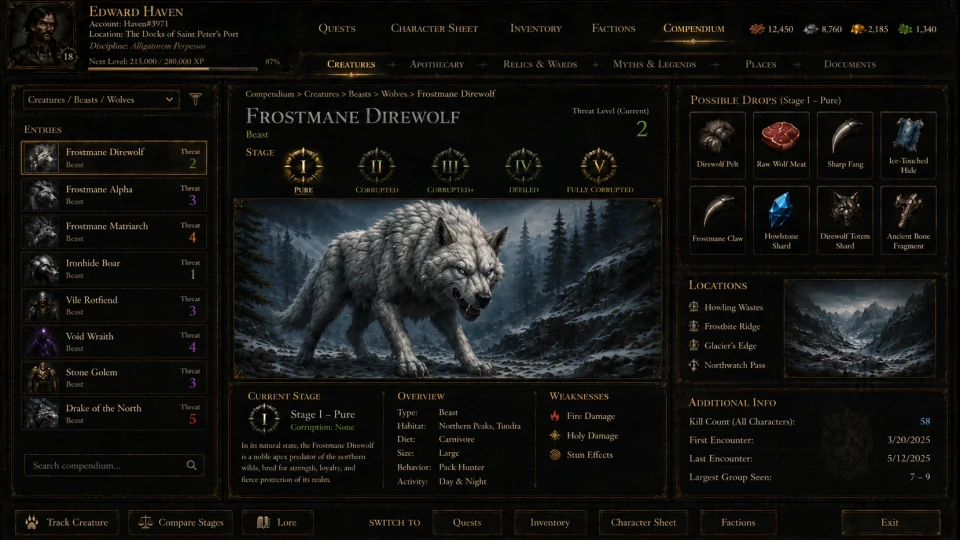
Compendium
In developmentIntroduce the redesigned Compendium, providing players with a dedicated interface for discovering and reviewing creatures, enemies and other recorded knowledge from the world.
Read details
The Compendium provides a dedicated in-game reference for knowledge the player discovers throughout Mythic Earth.
Beginning with creature and enemy records previously represented through the Bestiary concept, the redesigned interface presents discovered entries through a structured and visually consistent system.
Players will be able to browse recorded creatures, examine individual entries and review information associated with discoveries made during exploration and gameplay.
The Compendium is intended to grow beyond a simple creature list, providing a scalable foundation for additional forms of discoverable world knowledge as development continues.
The redesign also brings the Compendium into the same established interface style as the Character, Inventory and Factions screens, creating a consistent visual language across Mythic Earth’s major information interfaces.